
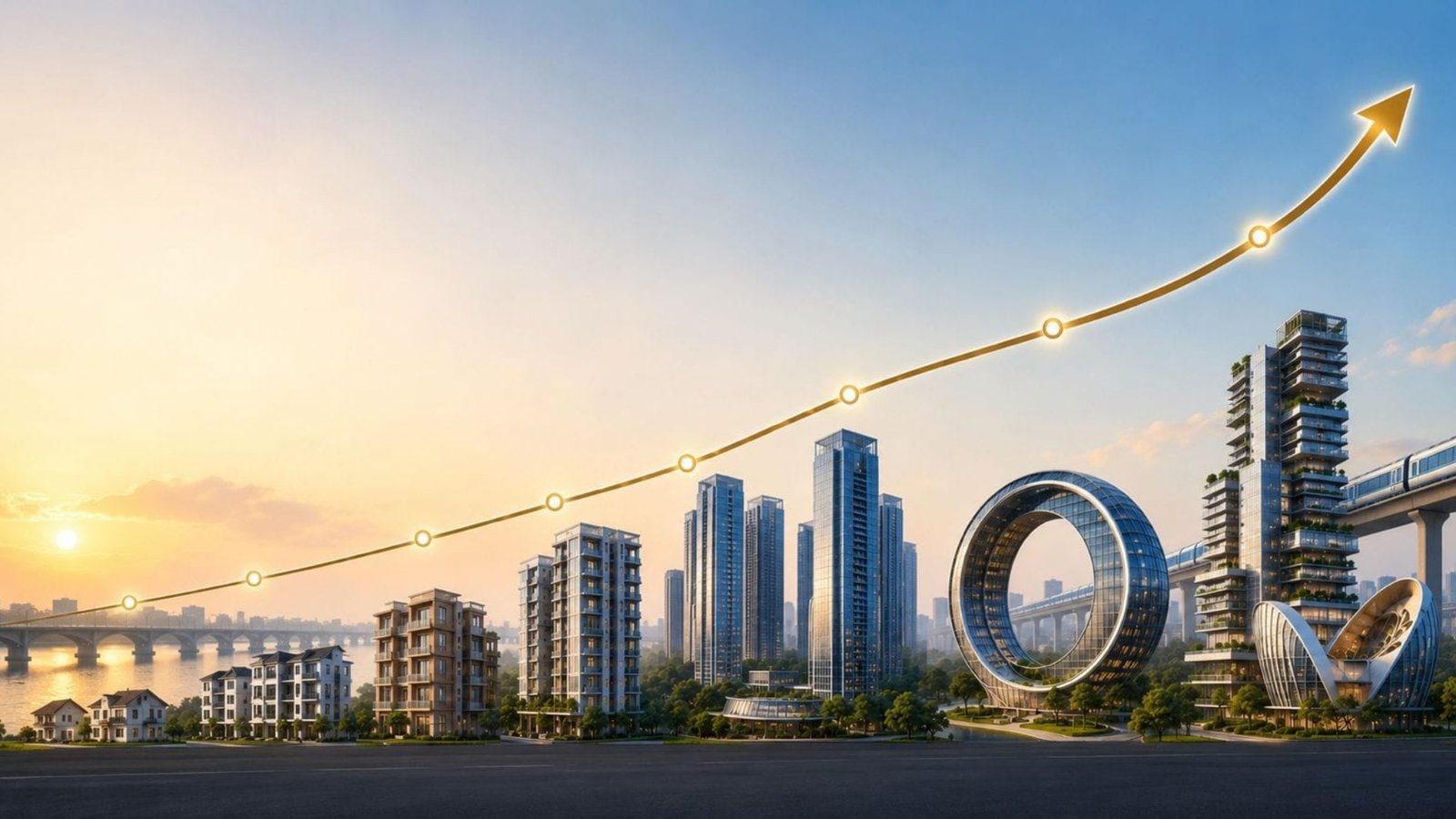
Infrastructure development is the single most powerful driver of medium-term real estate appreciation, and Ahmedabad is currently in the middle of an infrastructure investment cycle that will reshape property values across the city over the next five to ten years.
Metro Phase 2, extending the existing network to cover South Bopal, Shela, and connecting more efficiently to Gandhinagar and GIFT City, is the most consequential project for residential property buyers. Properties within a 1-kilometre radius of confirmed Phase 2 stations have already begun to see pricing premiums, and this gap will widen as construction progresses.
The AUDA Development Plan expansion is systematically increasing the supply of approved residential and commercial land in Ahmedabad’s western and northern periphery. This regulatory clarity is encouraging major developers to launch projects in areas that were previously considered too far from the city centre.
The Ahmedabad-Mumbai High-Speed Rail corridor, while a national-scale project, will directly impact property demand near the proposed Sabarmati station area, which is expected to emerge as a transit-oriented development hub with mixed-use demand for residential, retail, and hospitality property.
Road widening and flyover projects along the Sarkhej-Gandhinagar Highway and the Ring Road network are reducing commute times to previously inconvenient localities and making them viable for daily-use residential investment.
The industrial corridor development connecting Ahmedabad to Dholera Smart City is another long-horizon infrastructure catalyst. As Dholera attracts manufacturing and technology investment, the demand for housing and commercial space in the connecting zone — particularly in Sanand, Viramgam, and South Ahmedabad — will grow substantially. Identifying properties along these infrastructure pathways before the projects are complete is the classic strategy for infrastructure-driven real estate gains.